Solar Racking Installation: Why Precision in This Phase Protects the Whole Project
On a utility-scale solar site, thousands of piles are already in the ground. Module deliveries are scheduled. The electrical crew is lined up. The commissioning date has been promised to the owner. Everything now depends on one phase going right.
Racking.
If the racking is out of tolerance, modules do not fit cleanly. Trackers bind or fail to rotate smoothly. QC punch lists grow longer by the day. Rework crews get pulled from other scopes. And the schedule that looked solid on paper starts slipping one row at a time.
For EPCs and project owners, solar racking installation is where precision either protects the project or puts it at risk. Here is why this phase matters so much, what separates a strong racking crew from an average one, and what to look for when choosing a racking subcontractor.
What Solar Racking Installation Includes
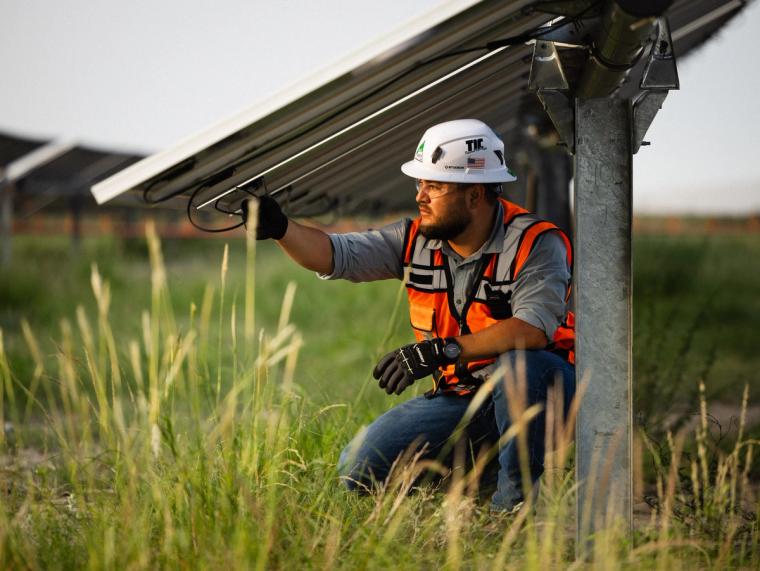
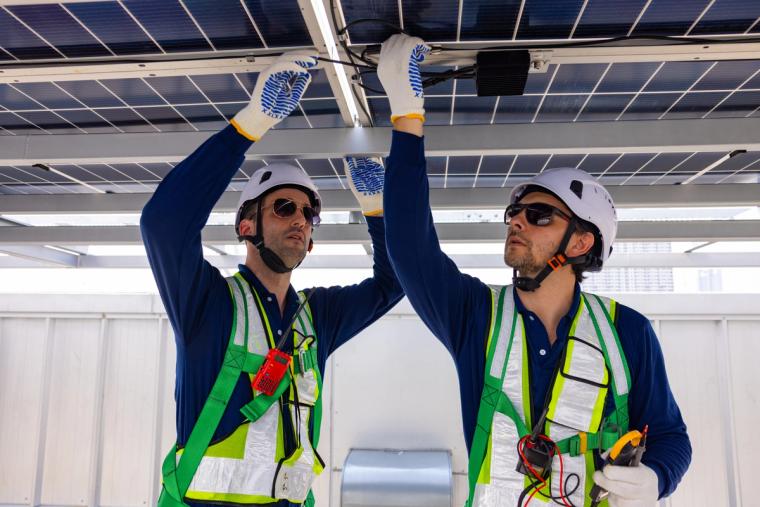
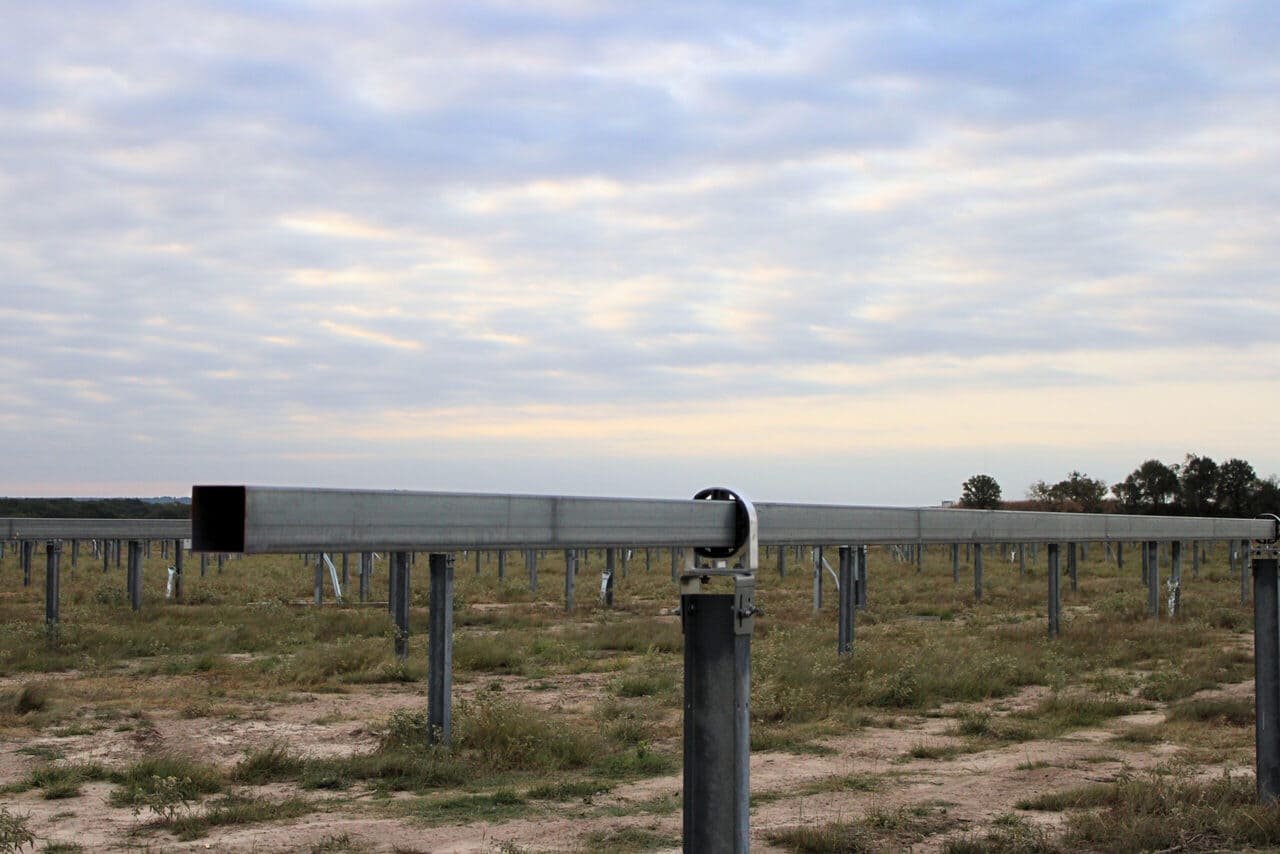
Racking is the structural system that holds solar modules in place for the life of the project. On utility-scale sites, that usually means fixed-tilt structures or single-axis trackers mounted to driven piles. Depending on the system and the scope of work, racking installation typically involves the following.
Setting bearings and brackets. Components are attached to piles and aligned to receive torque tubes or purlins.
Installing torque tubes or purlins. The primary structural members are placed, connected, and secured.
Installing drive systems. Motors, gearboxes, dampers, and tracker controllers are installed where applicable.
Aligning and leveling structures. Rows are brought into manufacturer tolerances for straightness, height, and slope.
Torquing fasteners. Bolted connections are torqued to specification and verified.
Preparing for module installation. Module rails, clips, or mounting points are set so module crews can work efficiently.
It sounds straightforward on paper. Across hundreds of megawatts and tens of thousands of connections, it is anything but.
Why Precision Matters So Much
Tolerances Stack Up
A small misalignment in a single row may seem harmless. Across hundreds of rows and thousands of connections, those small deviations compound. Out-of-tolerance racking can lead to module installation problems, uneven module planes, tracker performance issues, and potential warranty concerns with the racking manufacturer.
Rework Is Expensive
Fixing racking after the fact means pulling crews back into areas that were supposed to be complete, slowing downstream trades, and spending budget that was never in the plan. Rework also creates schedule uncertainty that ripples across the entire project. It is far more efficient to install the racking correctly the first time.
Trackers Need to Move Freely
Single-axis trackers rotate throughout the day to follow the sun. Binding, misalignment, or improper torque can cause mechanical stress, increase wear on drive components, reduce energy production, and lead to long-term maintenance problems for the owner and operator.
Every Trade Depends on It
Racking sits between pile installation and module installation in the construction sequence. When racking falls behind or requires correction, module crews, electrical crews, and commissioning teams all feel it. A strong racking crew keeps the entire site moving.
It Affects Long-Term Asset Performance
A solar project is expected to perform for decades. Racking that is installed correctly supports better module alignment, smoother tracker operation, and fewer maintenance issues over the life of the asset. What happens in this phase continues long after construction crews leave the site.
What Separates a Strong Racking Crew
Experience With Multiple Systems
Different racking manufacturers use different components, installation sequences, and tolerances. Crews who have worked with a range of tracker and fixed-tilt systems ramp up faster, understand common pitfalls, and make fewer mistakes when a new system arrives on site.
Quality Control Built Into the Process
Strong subcontractors do not wait until the end of the job to check their work. They verify alignment, torque, and component installation as they go, with documented QC that EPCs can review. Problems are caught and corrected in real time, not discovered weeks later.
Production Without Shortcuts
Speed matters on every utility-scale solar project. But production rates mean nothing if the work has to be redone. The best racking crews pair consistent daily production with consistent quality, and they plan their work to keep both moving together.
Field Leadership
Experienced foremen and supervisors make a major difference. They coordinate crews, resolve field issues, manage material flow, and maintain clear communication with the EPC’s site team.
Safety Discipline
Racking work involves heavy components and equipment, pinch points, and repetitive tasks across large, often remote sites. A strong safety culture protects people, prevents incidents, and keeps the project moving without costly stoppages.
Clear Communication With the EPC
Daily reporting, early identification of field issues such as pile tolerance problems, and responsiveness to design changes keep the EPC informed and in control of the schedule.
Common Racking Challenges on Utility-Scale Sites
Pile tolerance issues. Piles that are out of position or at the wrong elevation can complicate racking installation. Experienced crews know how to identify and communicate these issues quickly.
Material logistics. Large sites require careful staging and distribution of components to avoid delays and damage.
Weather and terrain. Heat, wind, rain, and uneven ground all affect productivity and safety.
Labor availability. Skilled racking labor can be difficult to find during peak construction seasons.
Design changes. Revisions during construction require quick adaptation without sacrificing quality.
Questions EPCs Should Ask a Racking Subcontractor
Which racking and tracker systems have your team installed? Look for experience with your specified system or similar ones.
How do you manage QC and torque verification? Ask to see examples of QC documentation.
What production rates do you typically achieve? And how do you maintain quality at that pace?
How do you handle field issues? Problems will arise. Ask how they are identified and resolved.
What does your safety program look like? Safety performance should be documented and verifiable.
How will you report progress? Clear, consistent reporting keeps everyone aligned.
Build It Right the First Time
Racking is not the phase to cut corners. It is the phase that sets up everything that follows, from module installation and electrical work to commissioning and decades of energy production.
Power Ray provides utility-scale solar mechanical installation, including racking and tracker installation, with experienced crews built for precision, production, and safety.
Request a bid from Power Ray for your next utility-scale solar project, or invite Power Ray to your bidder list for upcoming work.